Global Petrochemical Specialists – Polyamide
Benzene and Derivatives Supply for Polyamide: Impact of Middle East War
Executive Summary
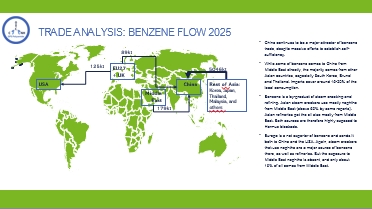
Hormuz Strait blockade disrupts not only oil and gas supply, it also puts the entire petrochemical industry in disarray. Many petrochemical products are transported out of the Middle East to serve value chains in other regions. This report quantifies the impact for benzene, cyclohexane and phenol supply in Q2 2026 using scenario analysis across four key regions: China, Asia outside of China (Rest-of-Asia), EU27 and the USA.
Report Details
- Price: €3900
- Edition: 1.2
- Page Count: 42
- Availability: Available
Full Report Description
This report analyses the potential effects of Middle East war and losses in oil and chemicals production for the supply of one of the key petrochemicals, benzene, and two of its derivatives that are important for the global polyamide industry, cyclohexane and phenol.
Benzene is mostly a by-product of ethylene, coke and refinery production. This decouples its supply dynamics from the demand of downstream industries and makes its supply/demand situation and prices particularly volatile.
Based on the analysis of the global trade and the structure of benzene, cyclohexane and phenol production and demand, the following questions will be considered using scenario analysis:
- What will be the effects of Hormuz Strait blockade and the Middle East war for the supply of benzene, cyclohexane and phenol in China, Rest of Asia, European Union and in the USA?
- What are the expected consequences for polyamide polymer and intermediates production in these regions?
- What are the possibilities to mitigate negative consequences for consumers of benzene, cyclohexane and phenol in each of the regions?